Customer Scenario: From Sales Opportunity to Project Delivery with AI
Winning a deal is only the beginning.
For many teams, the real challenge starts after the opportunity is closed: sales information needs to be handed over to delivery, customer requirements must be summarized, project records need to be created, documents must be prepared, and internal workflows need to move forward.
With Yeeflow Agent and Copilot, this process can become faster, more connected, and easier to manage.
The Scenario: Turning a Won Opportunity into a Delivery Project
Imagine a sales team has just won a new customer opportunity.
Traditionally, the sales owner may need to manually prepare a handover document, collect notes from CRM records, update internal project lists, notify the delivery team, and start an approval or kickoff workflow.
This creates delays and increases the risk of missing important customer context.
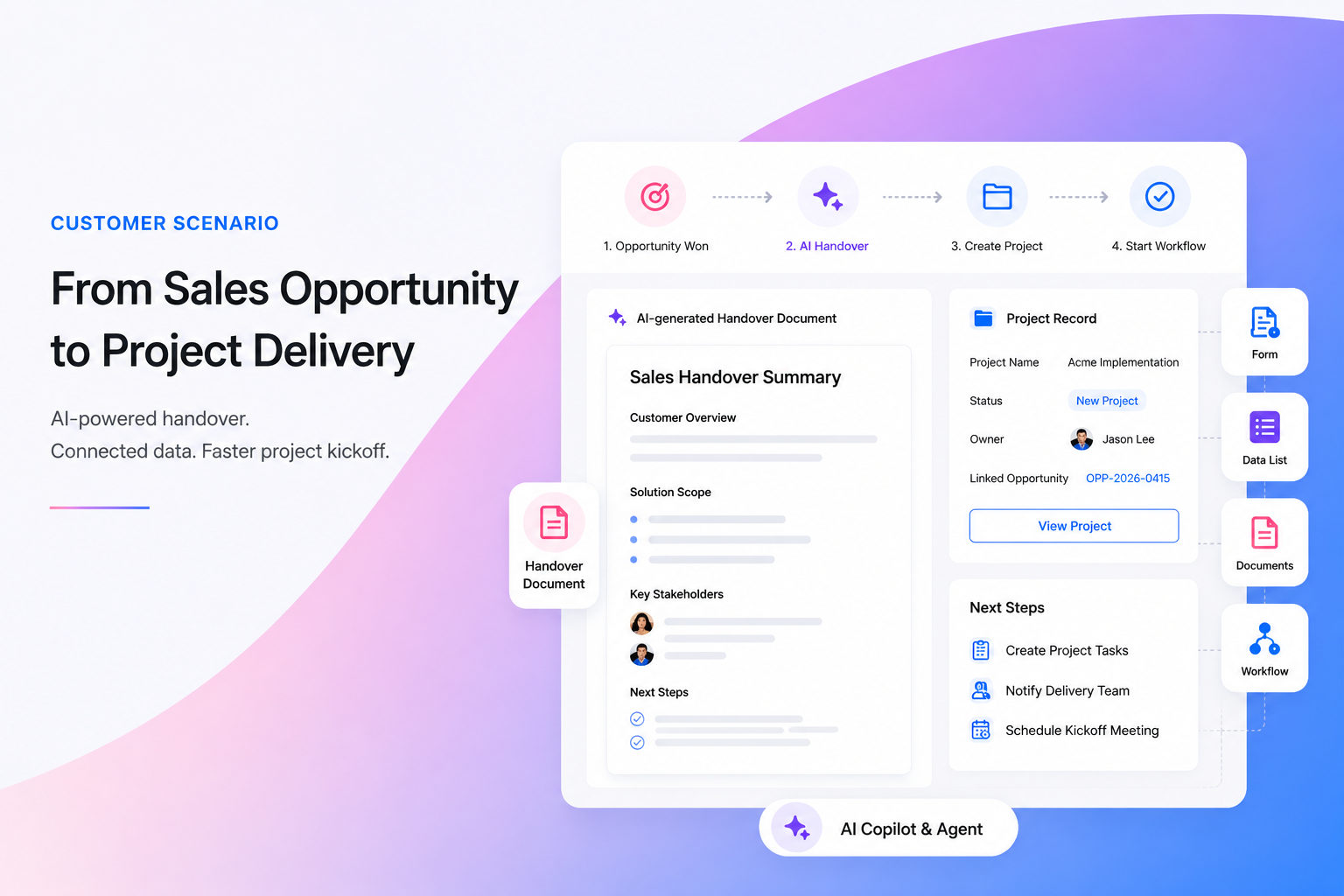
With Yeeflow, AI can help connect the sales handover process across forms, data lists, documents, and workflows.
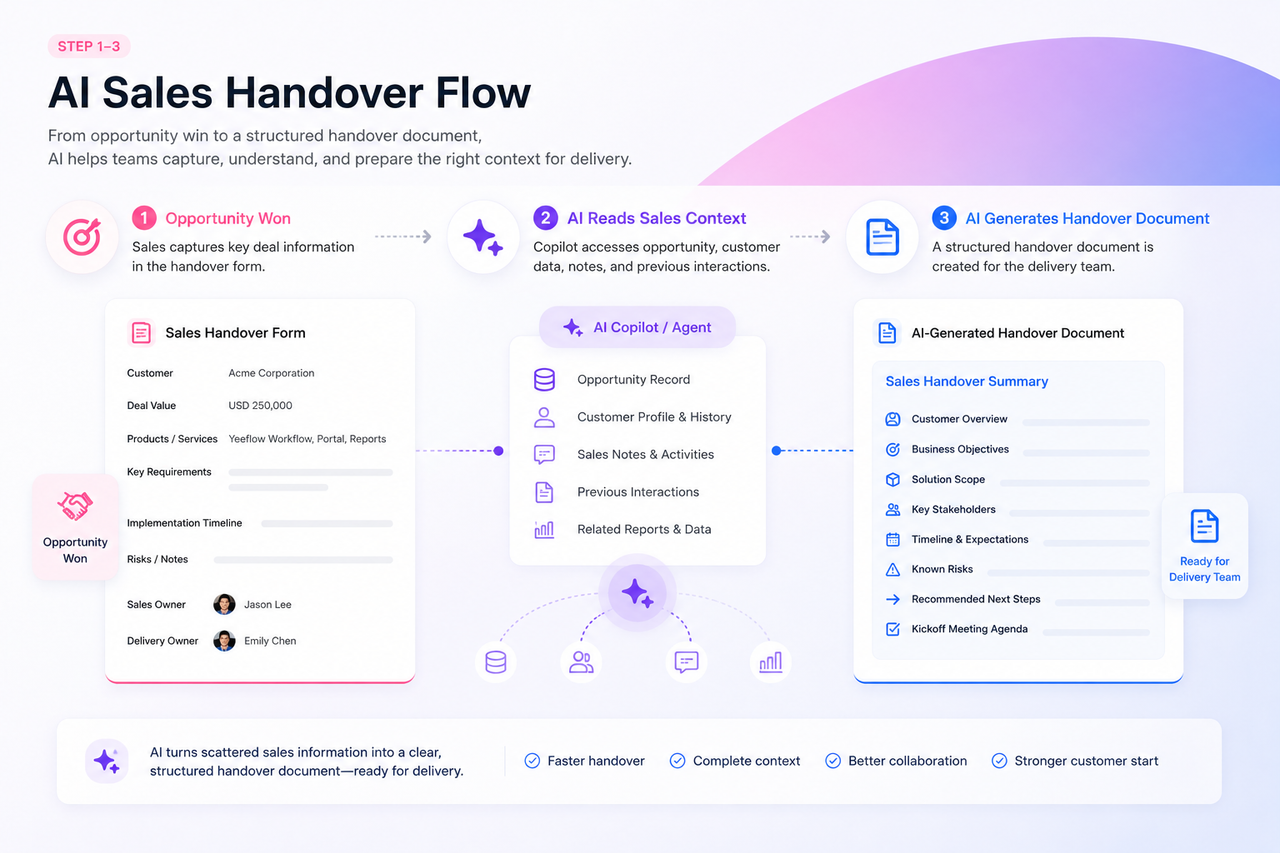
Step 1: Capture the Opportunity Details
The process starts when a sales opportunity is marked as won or submitted through a sales handover form.
The form may include:
● customer name
● deal value
● products or services purchased
● customer goals
● key requirements
● implementation timeline
● risks or special notes
● sales owner and delivery owner
This structured information becomes the foundation for the next delivery steps.
Step 2: Let AI Review the Sales Context
A Yeeflow Copilot or Agent can access the approved opportunity record, related customer data, notes, and previous interactions.
This is where AI becomes more than a simple assistant. Yeeflow’s roadmap positions resource access as a way for Agents and Copilots to work with native resources such as approval forms, data lists, document libraries, and reports, with operations such as read, add, edit, trigger, and invoke.
Step 3: Generate a Sales-to-Delivery Handover Document
Based on the opportunity information, Copilot can generate a structured handover document for the delivery team.
For example, it can include:
● customer overview
● business objectives
● purchased solution scope
● implementation assumptions
● key stakeholders
● timeline expectations
● known risks
● recommended next steps
● kickoff meeting agenda
This helps the delivery team understand the customer quickly without manually reading through scattered sales notes.
Step 4: Create or Update the Project Record
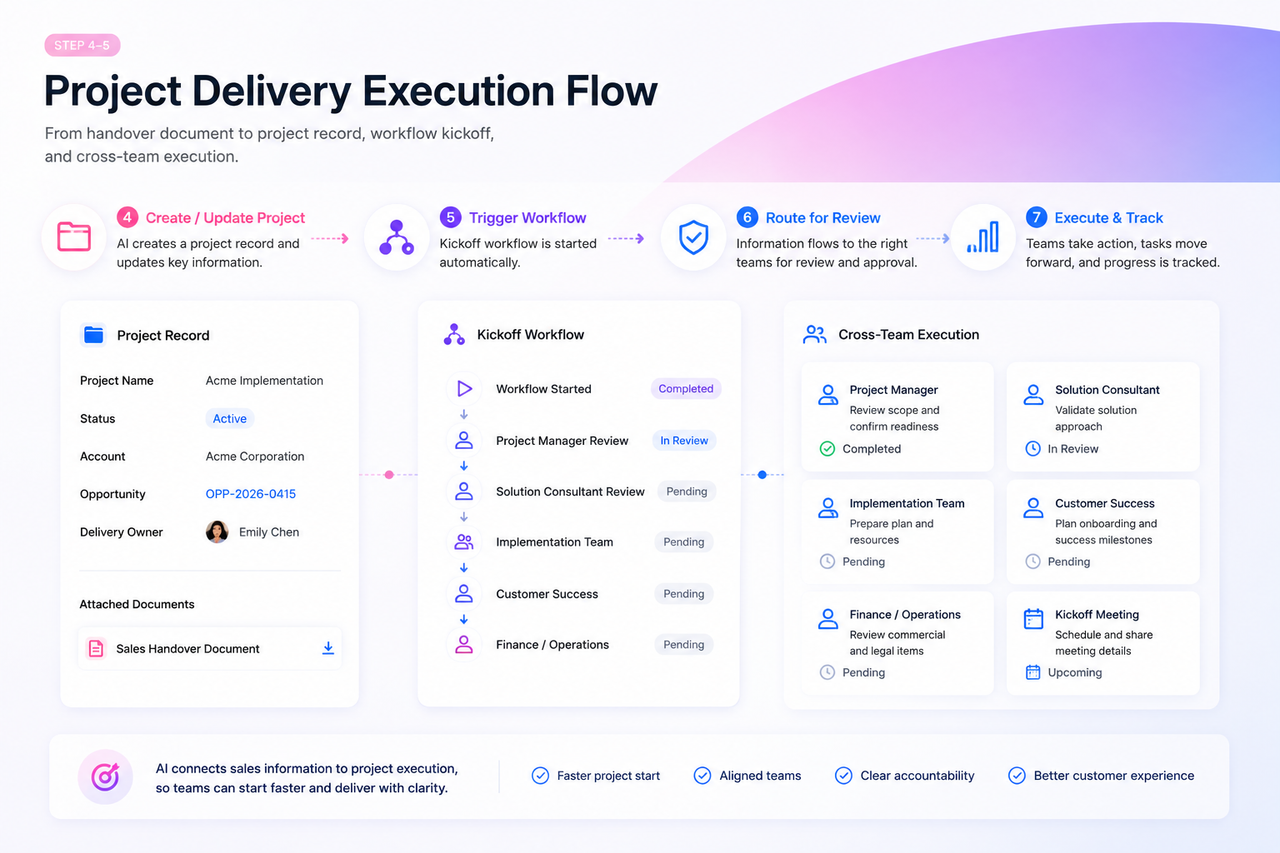
After the handover document is generated, the Agent can help update the project data list or prepare a new project record.
For example, it can:
● create a new project entry
● link the project to the original opportunity
● add delivery owner information
● update project status
● attach the handover document
● prepare initial project tasks
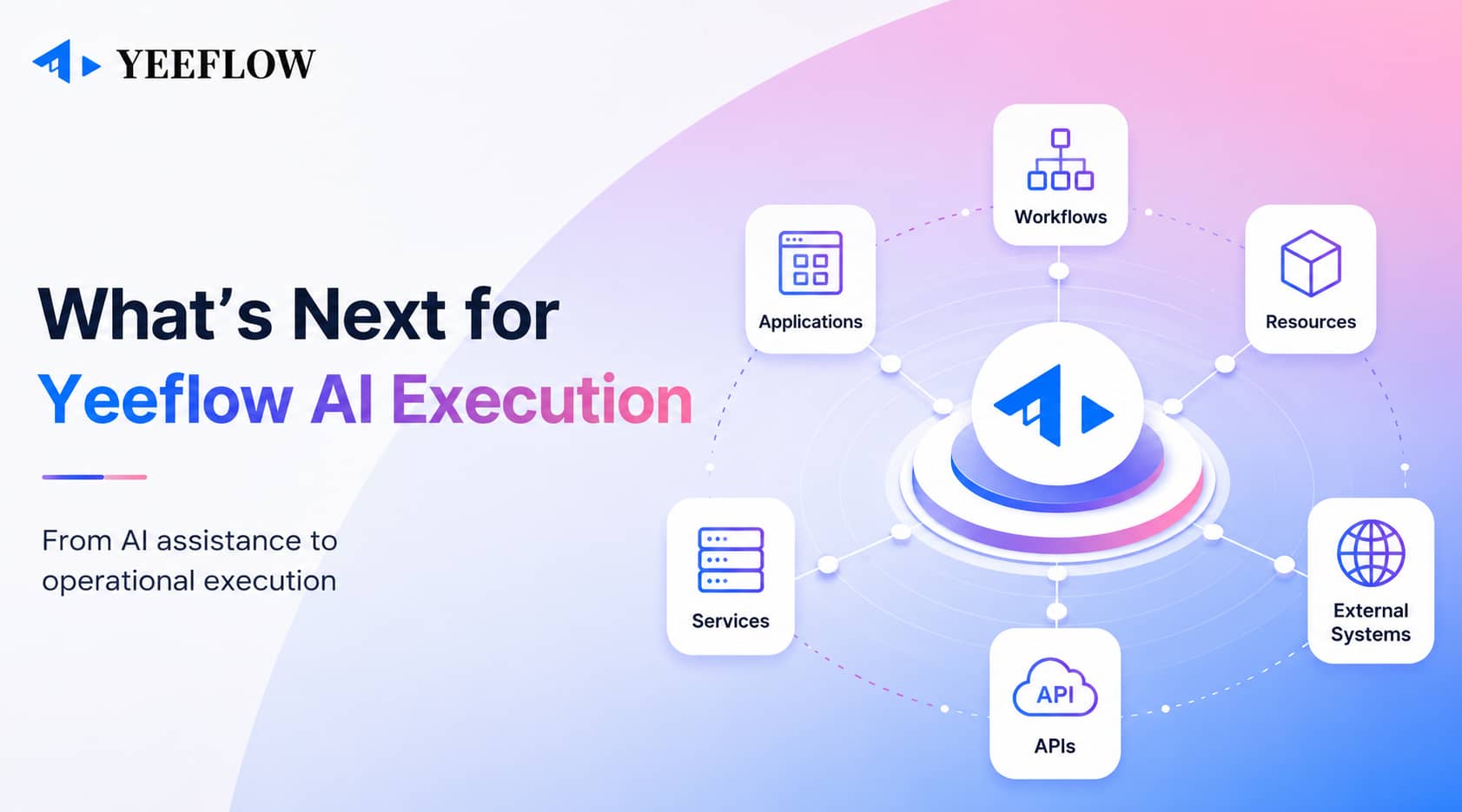
This reflects Yeeflow’s broader direction of AI-powered execution, where Agents and Copilots can act on workflows, application resources, services, and external systems.
Step 5: Trigger the Delivery Kickoff Workflow
Once the project record and handover document are ready, Yeeflow can trigger a delivery kickoff workflow.
The workflow may route the handover to:
● project manager
● solution consultant
● implementation team
● customer success manager
● finance or operations team
Each team can review the information, confirm readiness, and prepare for the customer kickoff.
Why This Matters
Sales-to-delivery handover is a common operational gap.
When information is incomplete or delayed, delivery teams may start with unclear expectations, customers may need to repeat information, and internal teams may lose momentum after the deal is closed.
By combining resource access, document generation, data list updates, and workflow automation, Yeeflow helps teams create a smoother transition from sales to execution.
From AI Assistance to Business Execution
This scenario shows how AI can support real operational work.
It is not just generating text.
It is reading business context, preparing structured documents, updating application records, and helping trigger the next workflow step.
Yeeflow’s 2026 direction emphasizes that AI should help users create, query, update, summarize, trigger, route, and orchestrate work inside real business applications.
Built for Connected Teams
For sales teams, AI reduces the time needed to prepare handover materials.
For delivery teams, AI improves visibility into customer needs and project scope.
For operations teams, AI helps standardize the transition from won opportunity to active project.
For leadership, the process becomes easier to track across dashboards, reports, and workflows.
Conclusion
A sales opportunity should not lose momentum after it is won.
With Yeeflow Agent and Copilot, teams can turn sales information into delivery-ready project work by connecting forms, data lists, documents, and workflows in one AI-powered application experience.
This is a practical example of how AI moves from assistance to execution — helping business teams move work forward with more speed, structure, and control.