Follow the workflow
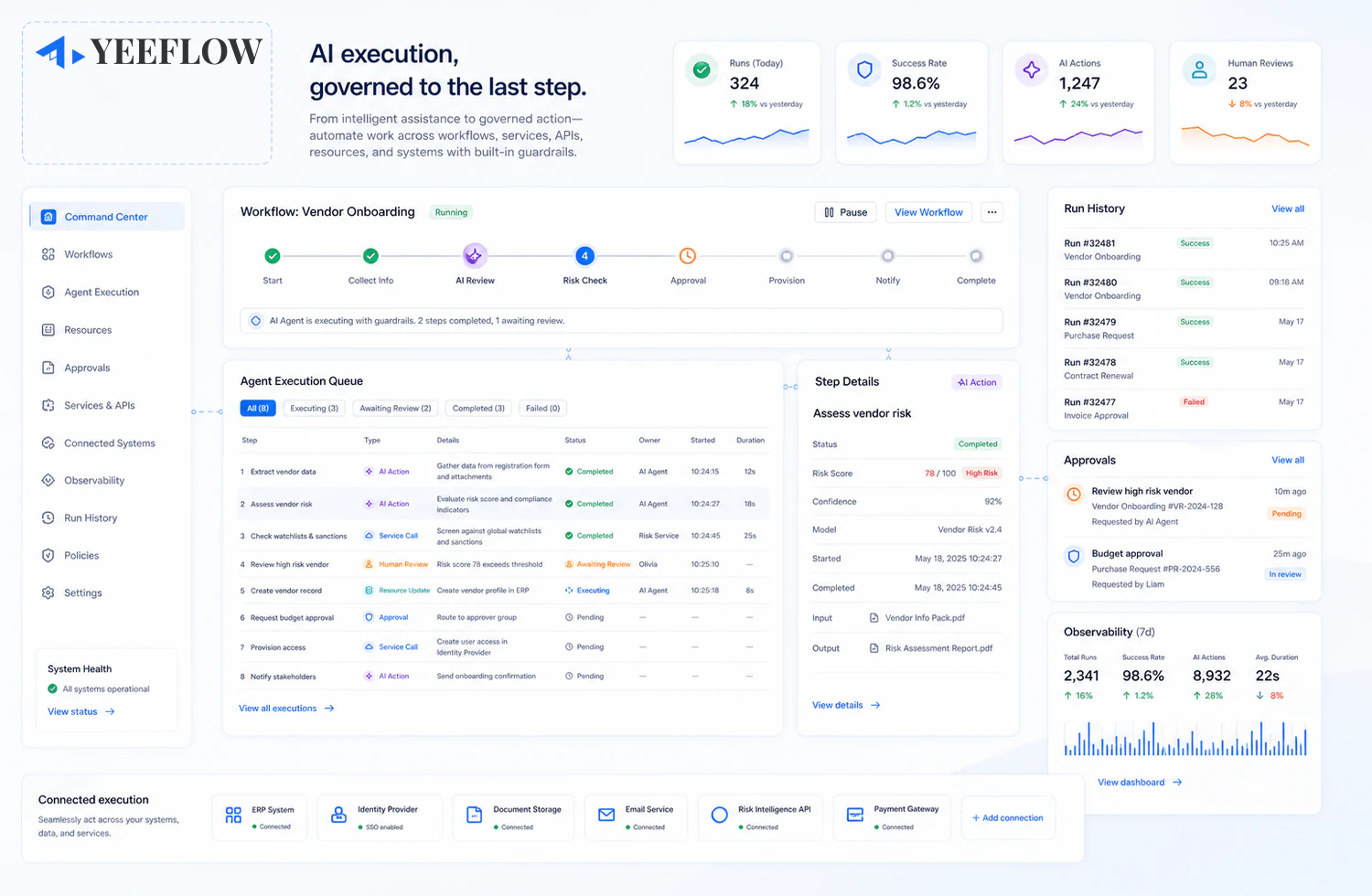
AI execution works inside modeled business processes, using the current step, rules, records, and ownership context instead of operating as a disconnected prompt.

AI-powered execution
Move beyond assistance. Use Yeeflow to coordinate follow-up, trigger workflow actions, update resources, call services, and connect execution across internal and external systems with control and visibility.
What AI-powered execution means
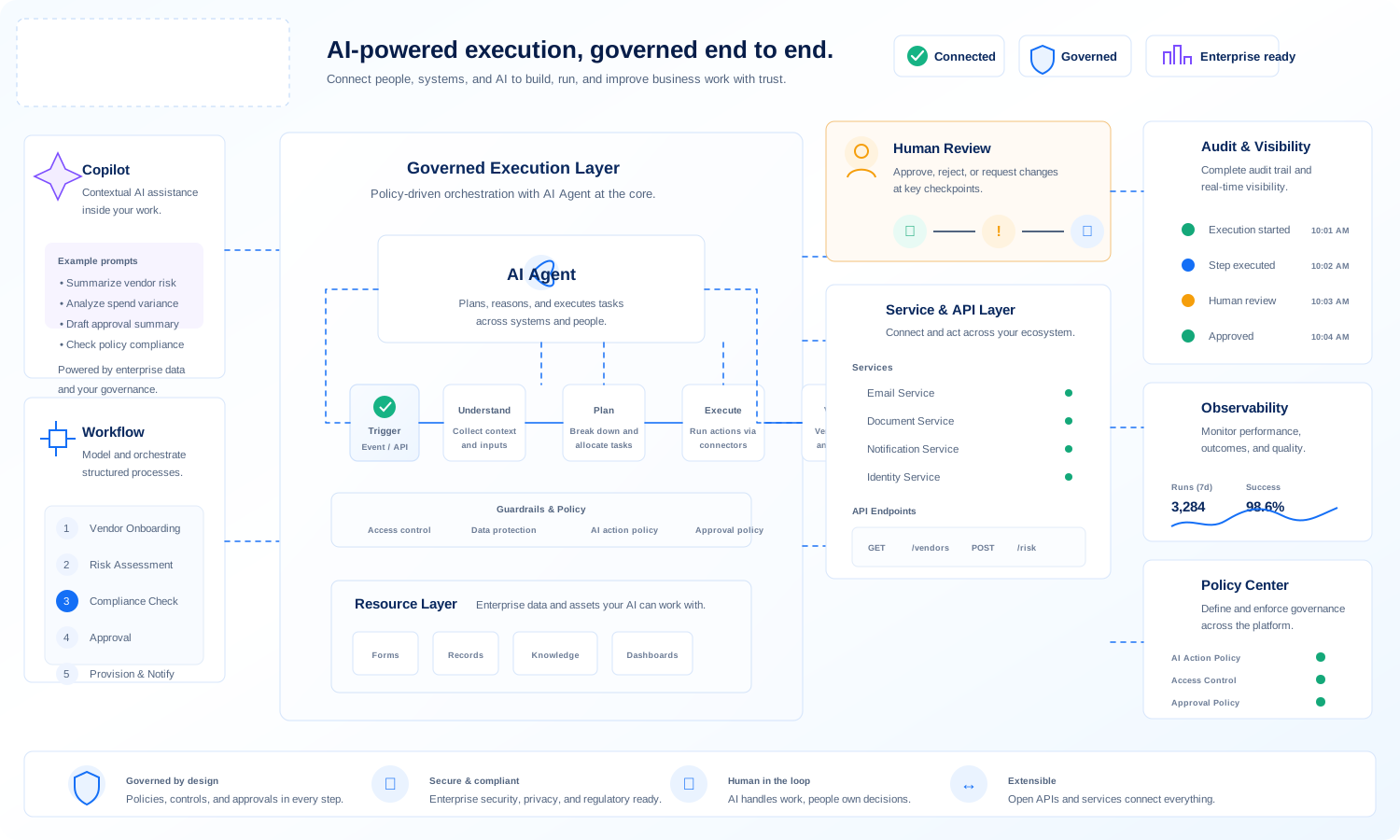
Yeeflow’s execution layer brings AI into the operating system of the business: workflows, resources, tasks, services, APIs, and connected systems.
AI execution works inside modeled business processes, using the current step, rules, records, and ownership context instead of operating as a disconnected prompt.
Agents can help prepare updates, create follow-up tasks, progress records, and coordinate work around forms, files, dashboards, and operational data.
Execution can connect with services and API-backed actions so business work can move across systems with policies, credentials, and review points.
Execution surfaces
AI execution becomes useful when it can operate across the same surfaces where business work is structured, routed, connected, and measured.
Call AI execution from approval flows, service processes, escalations, and task routes while keeping every step visible.
Use submitted data, attachments, and structured inputs to prepare next actions, summaries, validations, or follow-up work.
Work with records, documents, dashboards, queues, and business objects that define the operational state of a process.
Route execution through reusable services that wrap business logic, integrations, credentials, and system-specific actions.
Connect execution to OpenAPI-style endpoints and authenticated actions with clear boundaries and traceable outcomes.
Coordinate work across ERP, CRM, identity, document, notification, analytics, and external business systems.
Example business scenarios
AI-powered execution should feel practical: coordinating the next operational move, preparing controlled actions, and keeping people in charge when review matters.
Why Yeeflow execution is different
Yeeflow connects AI execution to the platform foundation that already governs business work: structured applications, reusable services, connected systems, and human accountability.
Execution starts from the applications, forms, dashboards, and workflows teams already use to run business operations.
Actions are grounded in records, tasks, files, process state, and data models rather than loose conversation history.
Yeeflow can route work through reusable services, external endpoints, credentials, and connected systems.
Permissions, approvals, run history, human review, and auditability stay visible as part of the execution model.
Human-in-the-loop execution
Yeeflow keeps AI-powered execution within business boundaries. Teams can define where AI may act, when approval is required, who can review, and how outcomes are traced before broader rollout.
Connected execution architecture
Agent, Copilot, workflow, resources, services, APIs, human review, and audit visibility come together as one connected execution system.