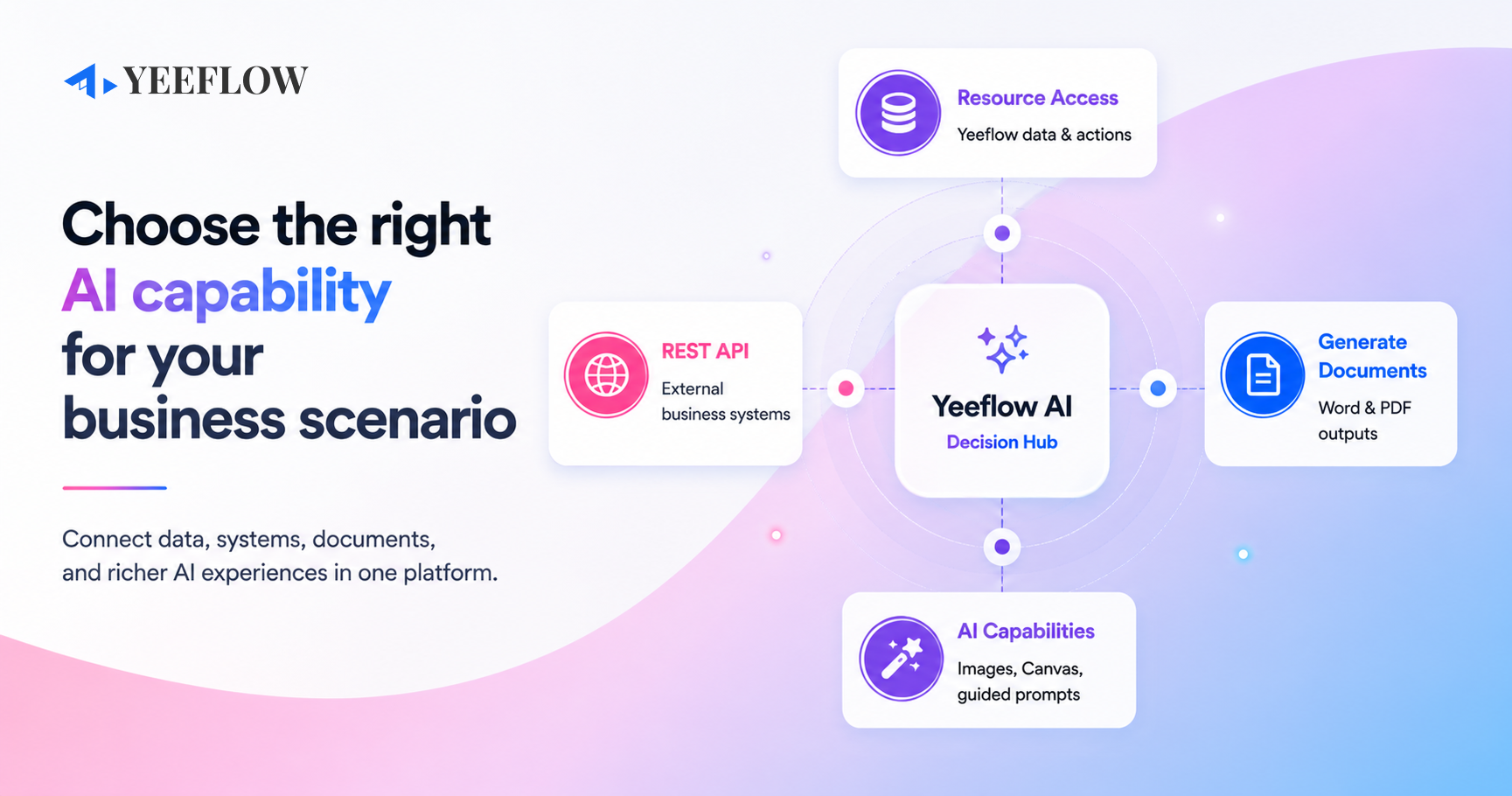
AI can support business work in many ways — but the best results come from choosing the right capability for the right scenario.
Some teams need AI to work with application data.
Some need AI to connect with external systems.
Some need AI to generate business-ready documents.
Others need richer ways to interact with AI through images, structured outputs, or guided prompts.
Yeeflow brings these capabilities together inside one enterprise AI application and execution platform, helping teams move from simple AI answers to practical business outcomes.
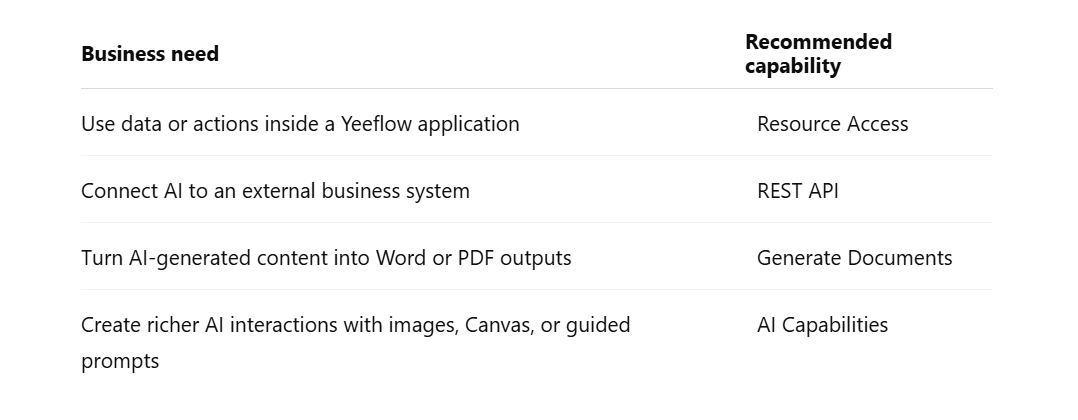
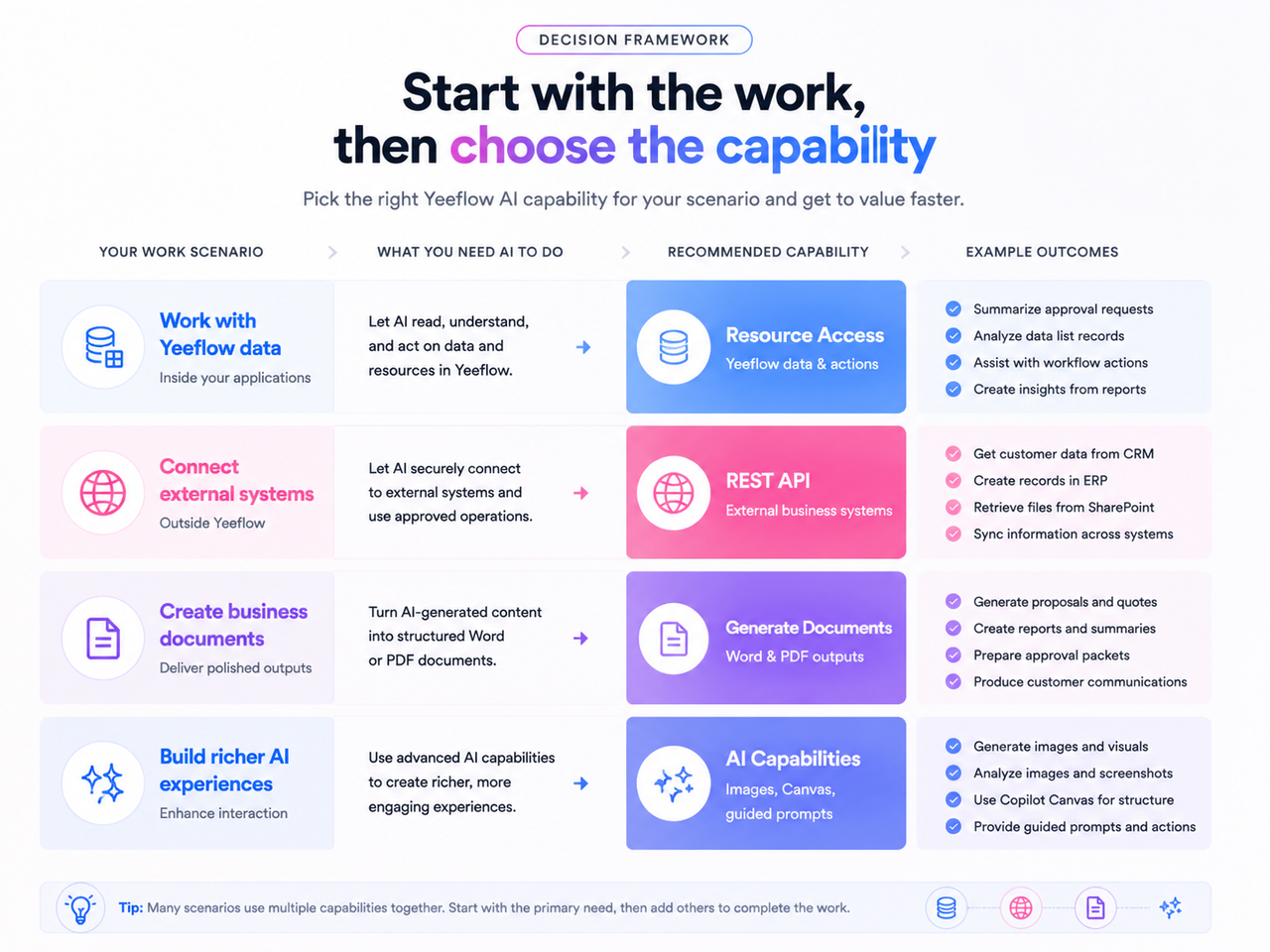
A simple way to choose
Start with the work you want to complete.
When to use Resource Access
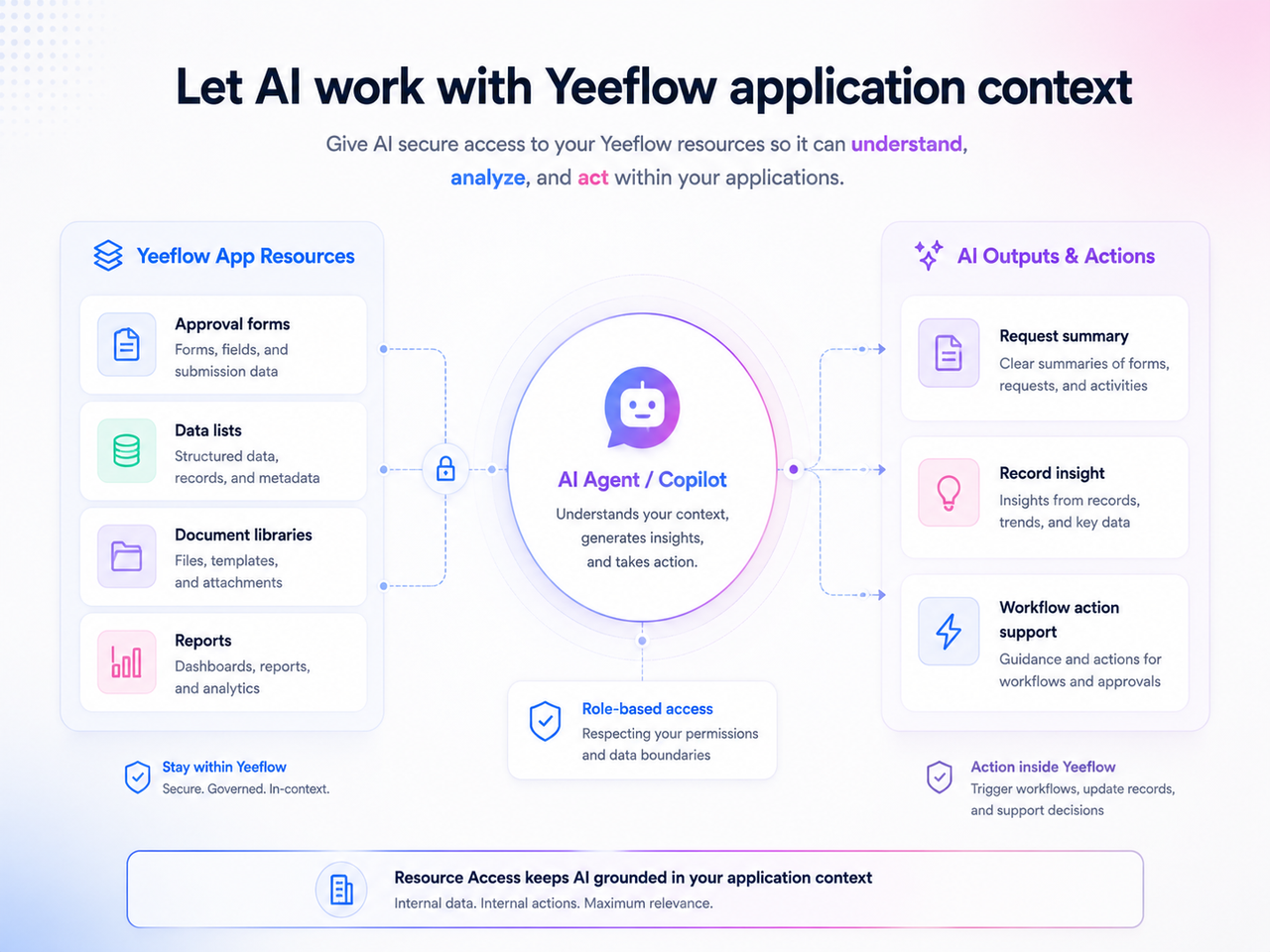
Use Resource Access when AI needs to work with information already managed inside Yeeflow.
This is useful for scenarios such as approval forms, data lists, document libraries, form reports, data reports, and other application resources.
For example, an AI Agent can read a request record, summarize key details, or help prepare a workflow-related response based on the current application context.
Use Resource Access when you want AI to work with your Yeeflow data and application actions in a controlled way.
When to use REST API
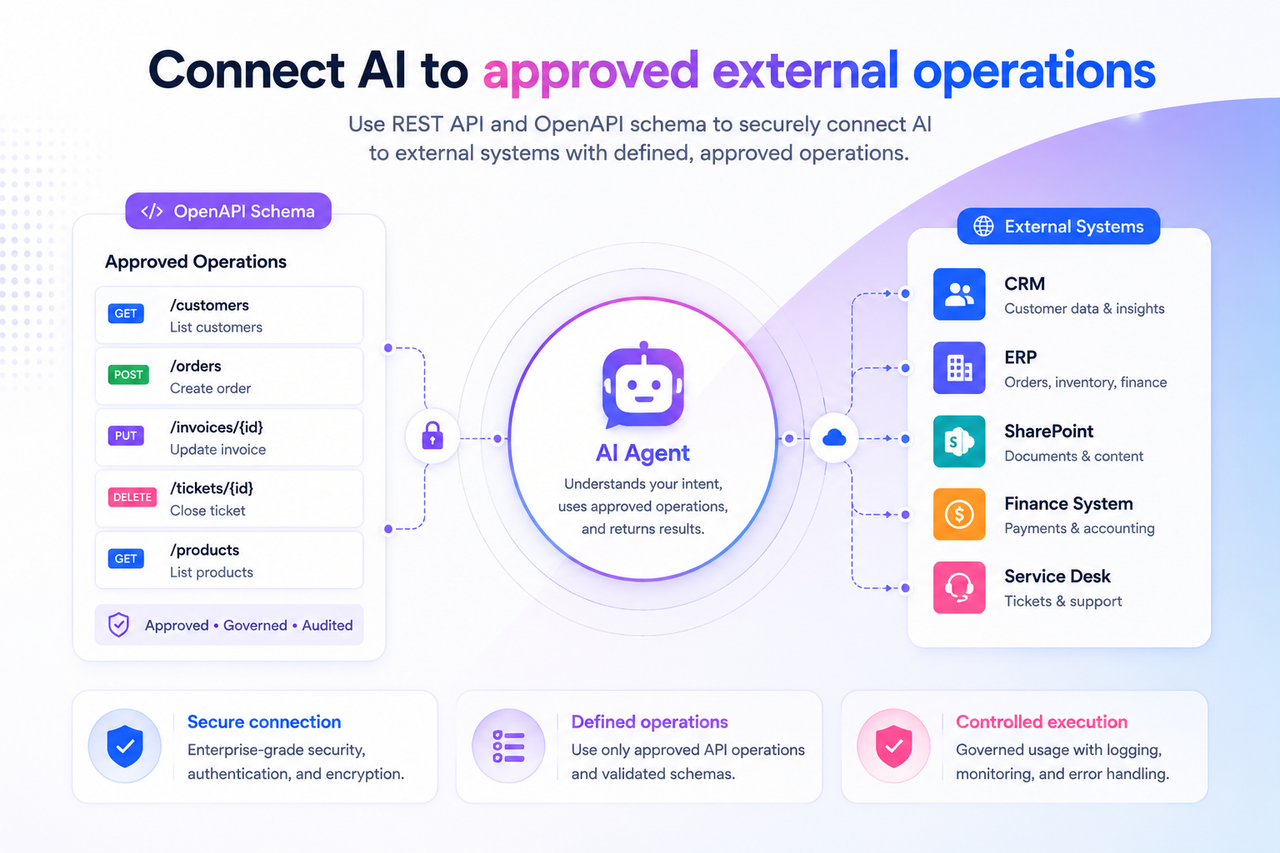
Call REST API when AI needs to connect with systems outside Yeeflow.
This is useful for scenarios involving CRM, ERP, SharePoint, finance systems, service desk platforms, internal APIs, or other third-party applications.
Instead of treating external integrations as unmanaged actions, REST API support helps teams define approved operations that AI can use through configured connections and structured API definitions.
Call REST API when you want AI to securely interact with external business systems.
When to use Generate Documents
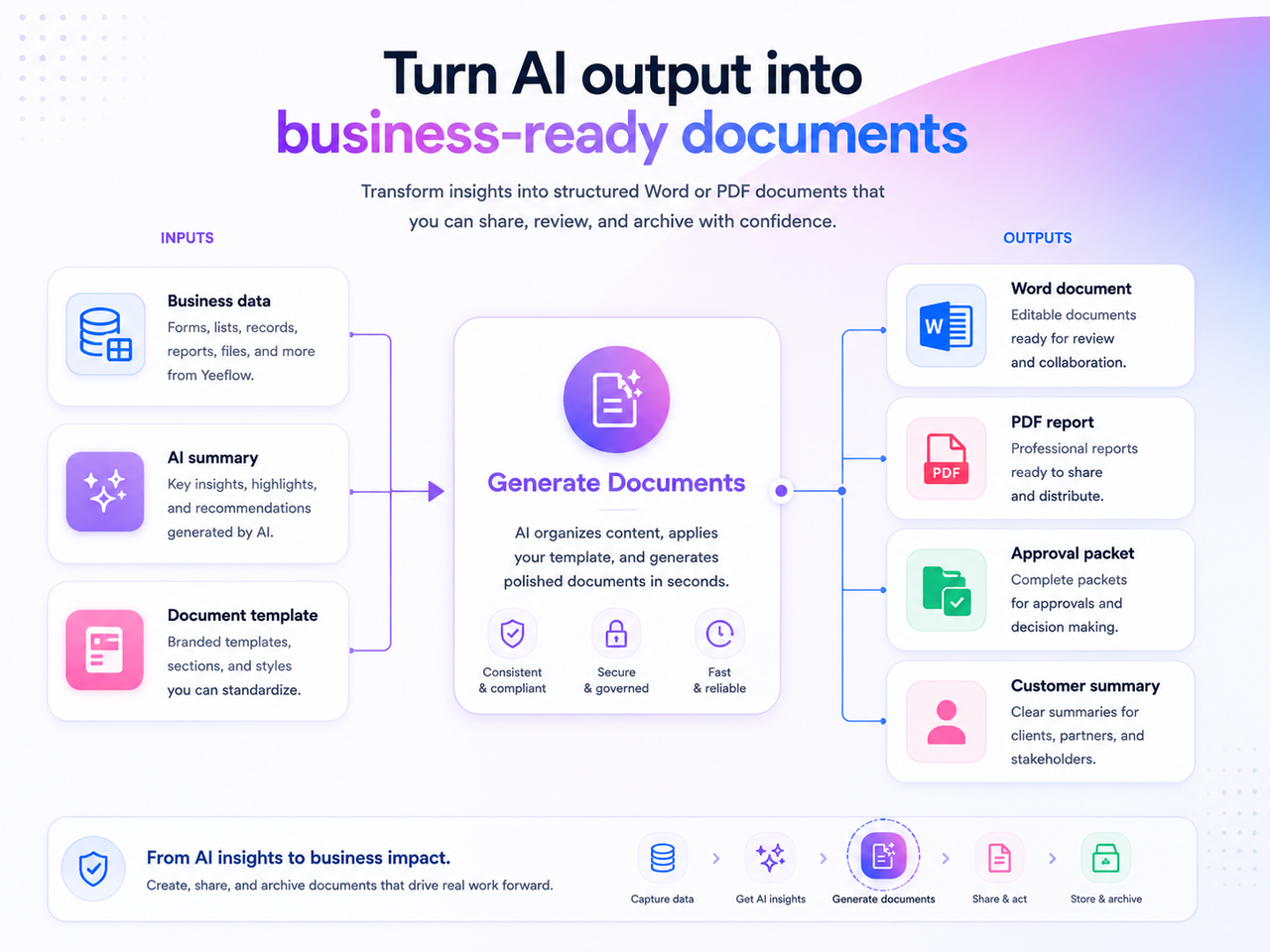
Use Generate Documents when AI output needs to become a business-ready file.
This is useful for proposals, summaries, reports, approval packets, customer communications, internal review documents, and other Word or PDF outputs.
Instead of leaving the result in a chat conversation, teams can turn AI-generated content into structured documents that are easier to review, share, and archive.
Use Generate Documents when the final outcome needs to be a document, not just an answer.
When to use AI Capabilities
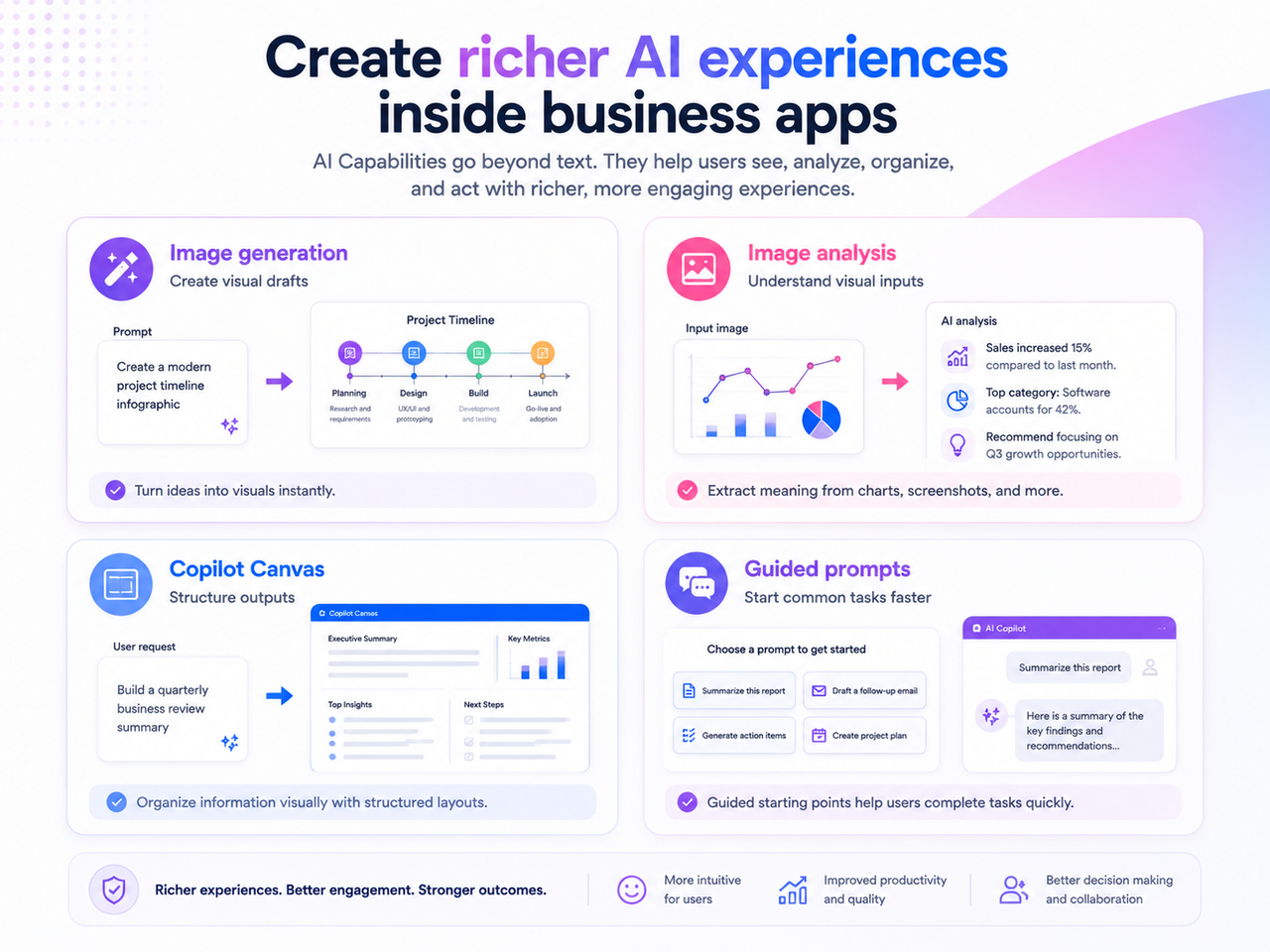
Use AI Capabilities when the user experience needs to be richer than text-only interaction.
This may include image generation, image analysis, Copilot Canvas, or guided prompts.
These capabilities help users create visual drafts, understand screenshots or image-based inputs, generate structured outputs, and start common tasks more easily.
Use AI Capabilities when you want AI to create a more useful application experience for users.
How these capabilities work together
In real business processes, these capabilities often work best together.
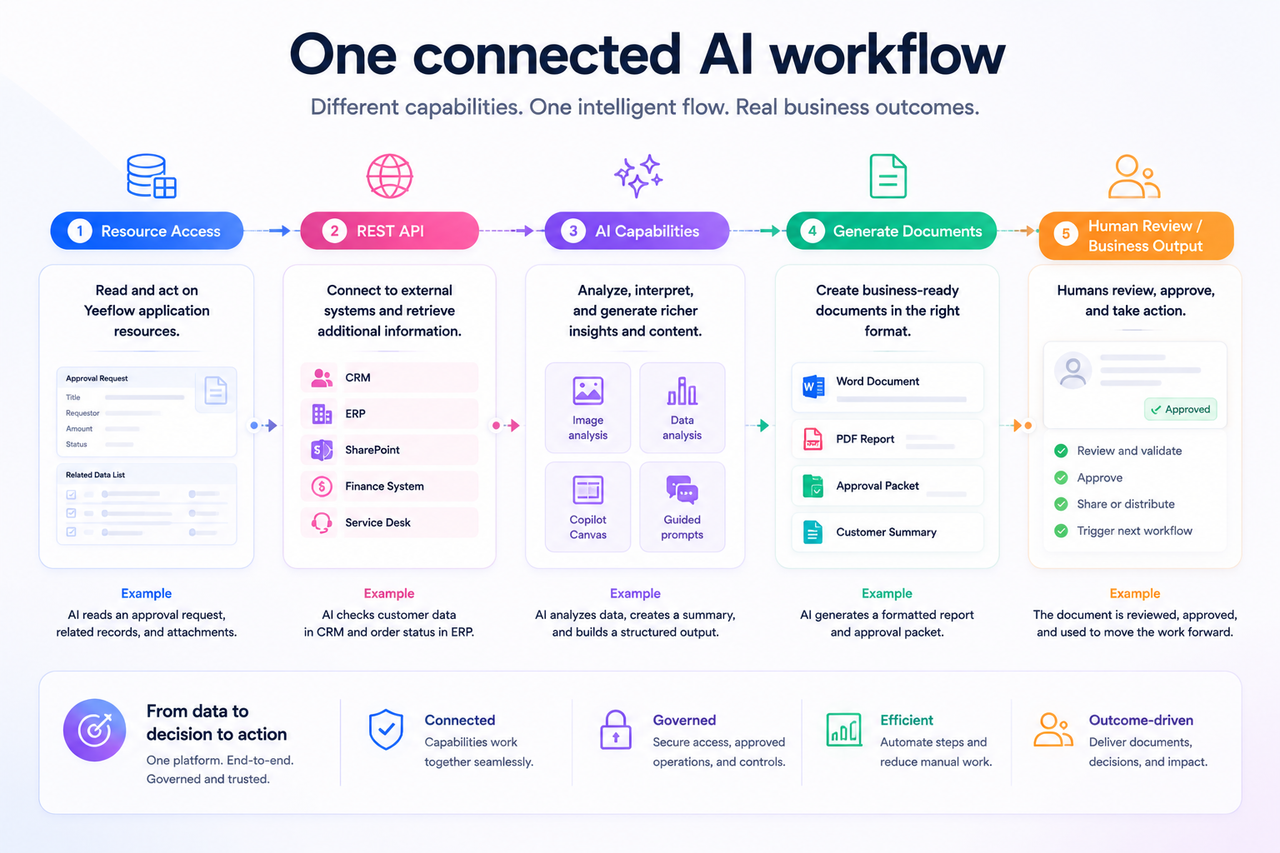
A team may use Resource Access to read application data, REST API to check information in an external system, AI Capabilities to analyze or structure the result, and Generate Documents to create a final report or summary.
This is where AI becomes more than a chat experience.
It becomes part of how work is reviewed, connected, completed, and shared.
Start with the scenario
The most effective way to adopt AI is not to start with a feature list.
Start with the business scenario:
What data does AI need?
Where does the action happen?
What should the final output look like?
Who needs to review or use the result?
Then choose the capability that best supports that work.
Resource Access helps AI work with Yeeflow data and actions.
REST API connects AI to external systems.
Generate Documents turns AI output into business-ready files.
AI Capabilities create richer interaction and output experiences.
Together, they help teams move from AI answers to AI-powered business execution.