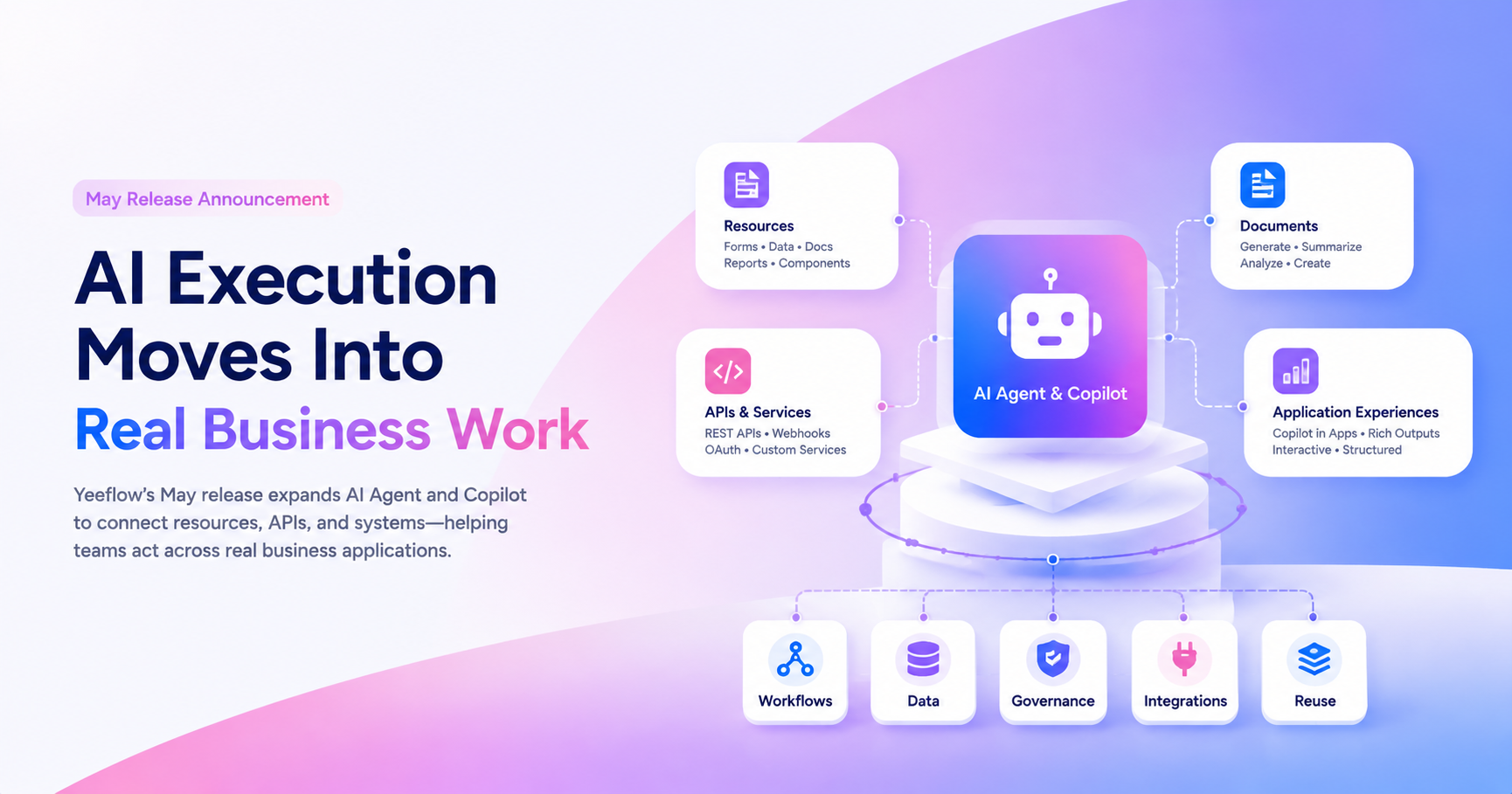
AI becomes more valuable in business applications when it can do more than answer questions.
In real operations, teams need AI to work with data, workflows, documents, approvals, and external systems. A sales team may need the latest customer record from a CRM. An operations team may need to check a shipment status from another platform. A partner team may need to sync updates to SharePoint and then summarize the latest external data inside the application.
For AI to support this kind of work, external system access needs to be structured and controlled.
That is where Yeeflow’s Call RESTful API capability comes in.
With OpenAPI schema support, Yeeflow can define approved RESTful API operations and make them available for AI to use inside business applications. Instead of treating external systems as disconnected endpoints, teams can expose a clear set of business operations that AI can discover, select, and use based on context.
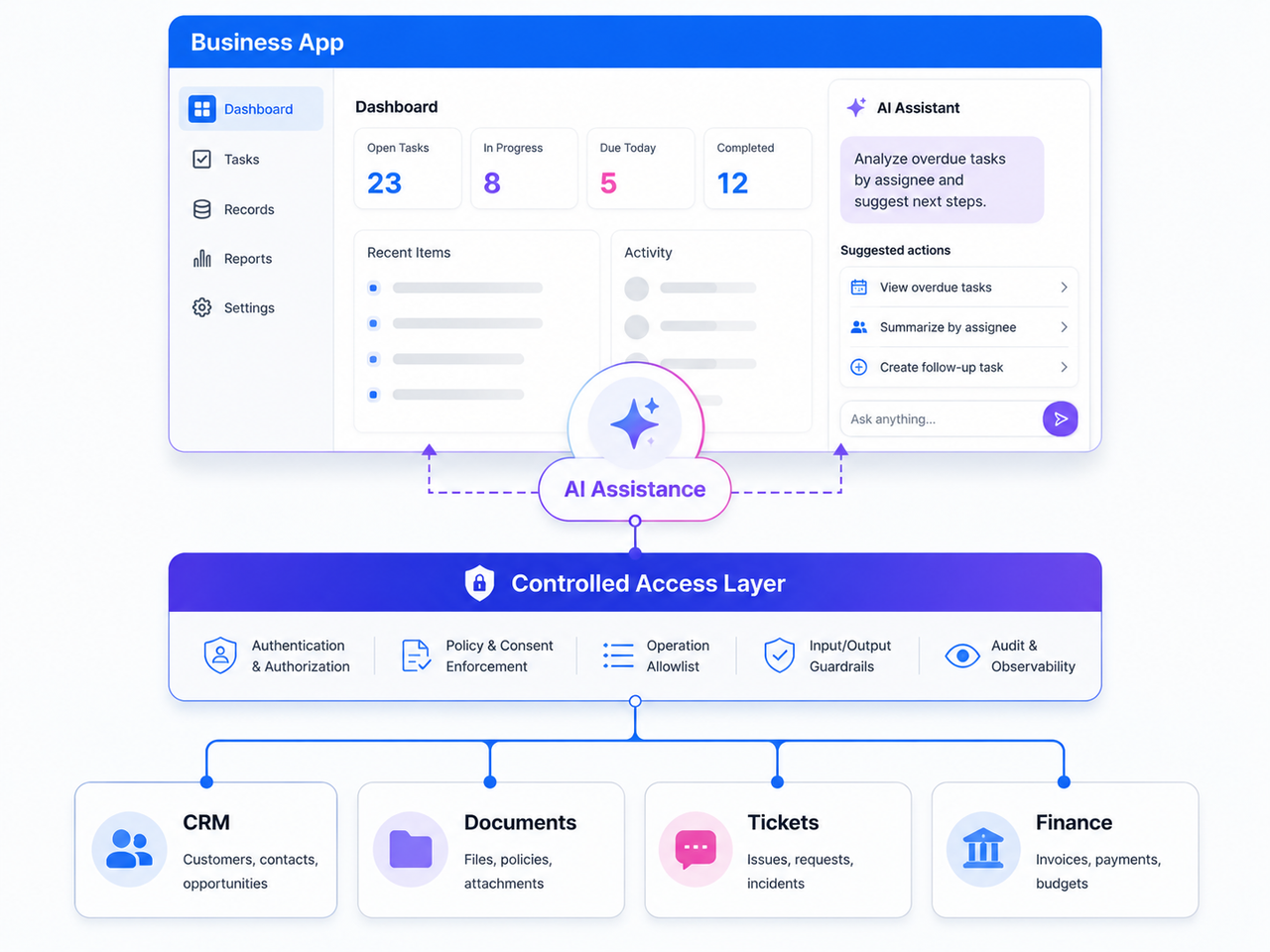
Why connecting AI to business systems needs structure
Many business processes depend on systems outside the application where users are working.
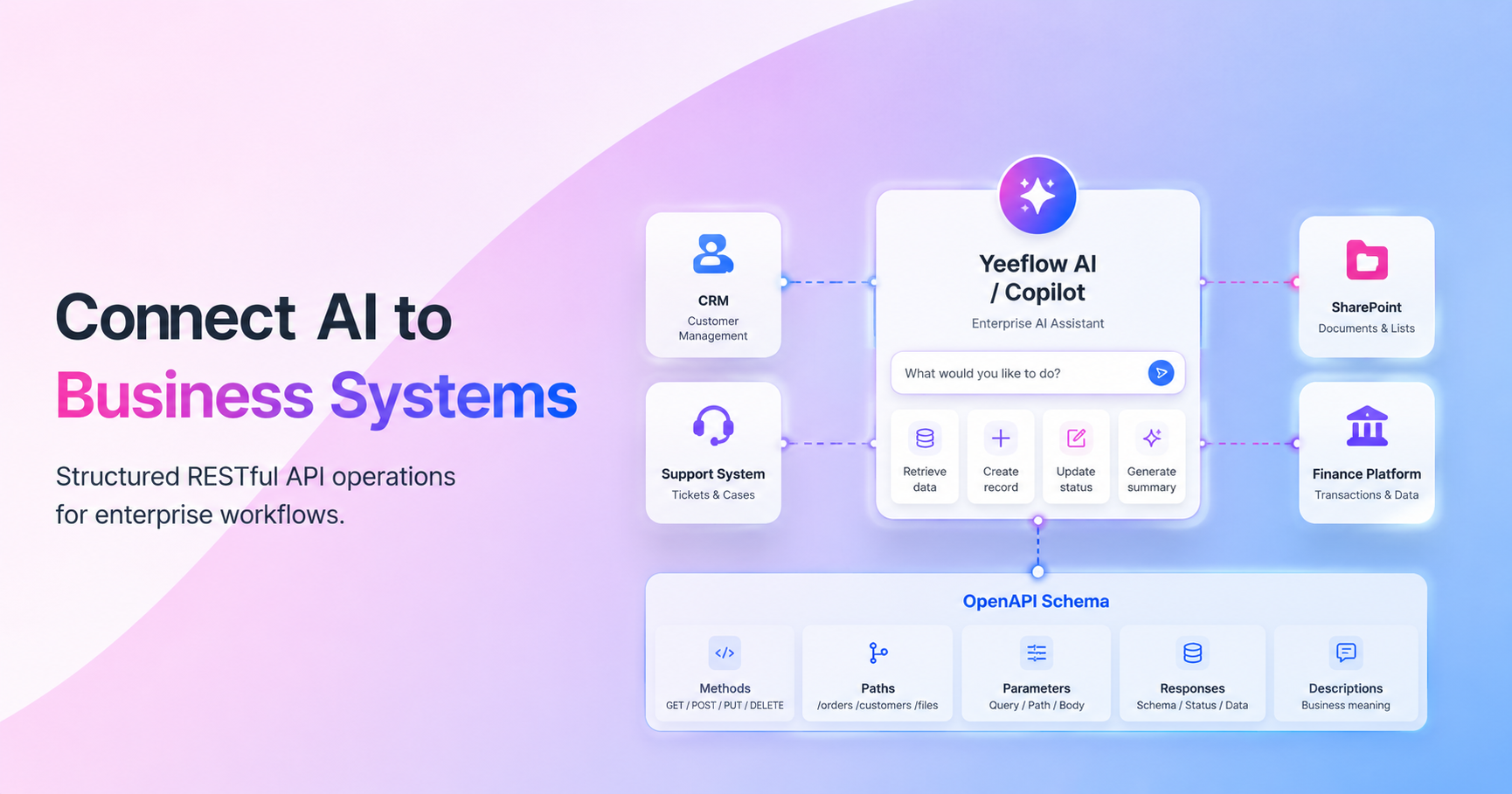
Customer data may live in a CRM. Contract files may live in SharePoint. Service tickets may live in a support system. Financial records may live in another platform. If AI is expected to help users complete real work, it needs a reliable way to interact with these systems.
But enterprise AI should not call external systems in an unmanaged way.
Teams need to know:
- which systems AI can connect to
- which operations are available
- what each operation is designed to do
- what inputs are required
- what data comes back
- which connection and authorization settings are used
A single hardcoded request can solve one narrow task. But as business scenarios become more complex, AI needs a more structured layer of approved operations.
What Call RESTful API introduces
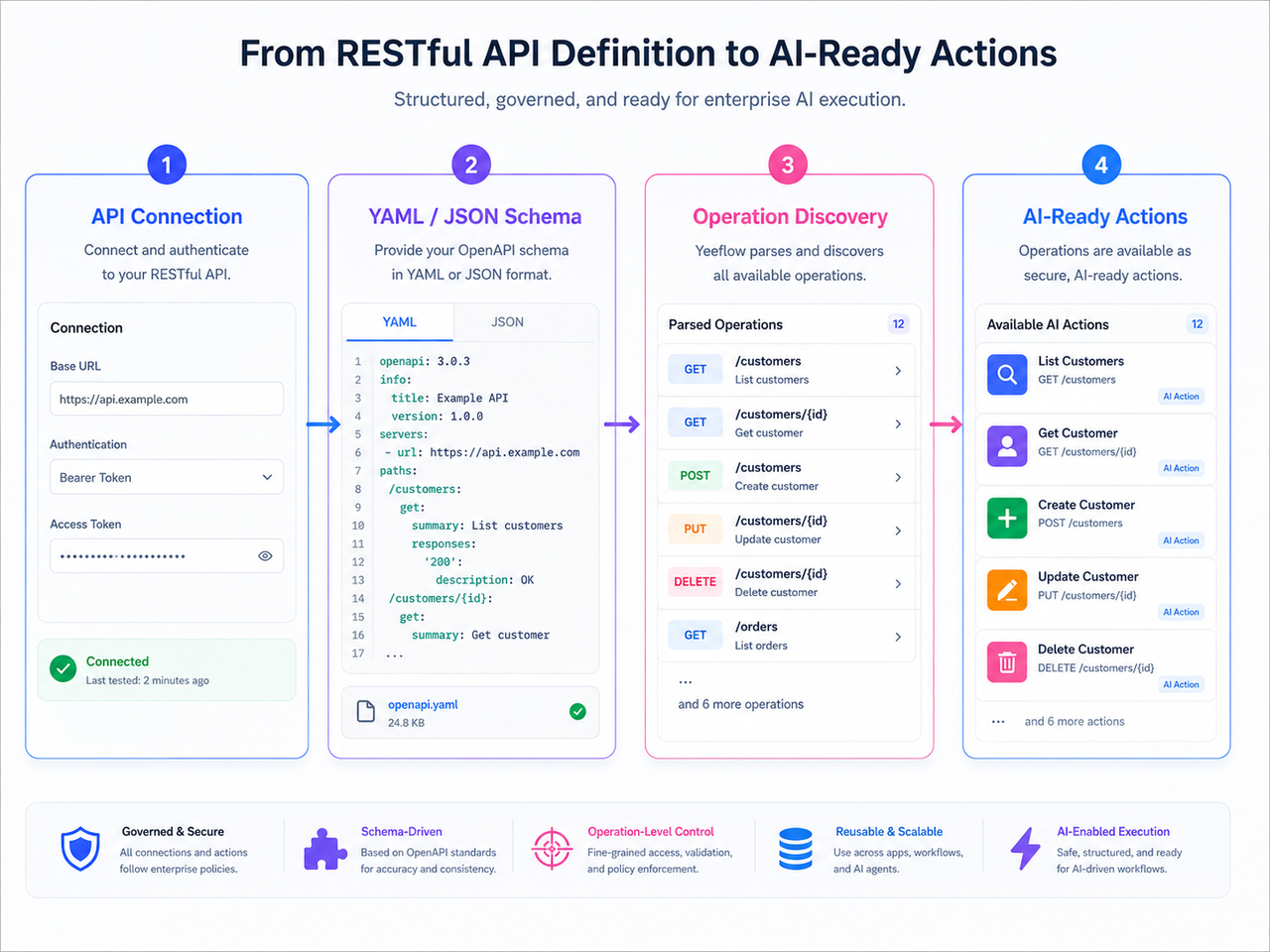
Yeeflow’s Call RESTful API tool allows teams to define RESTful API capabilities through a schema-based setup.
In the tool configuration, builders can select an existing HTTP API or OAuth 2.0 API connection, then provide a YAML or JSON schema that describes the available API operations.
Yeeflow can then parse the schema and identify the available operations, including details such as method, path, parameters, and operation descriptions.
This gives AI a more structured way to work with external systems.
Instead of relying on a single isolated request, AI can work from a defined list of available operations. When the user asks for something, AI can select the operation that fits the business context and return structured results back into the application.
Why Open API-based operation discovery matters
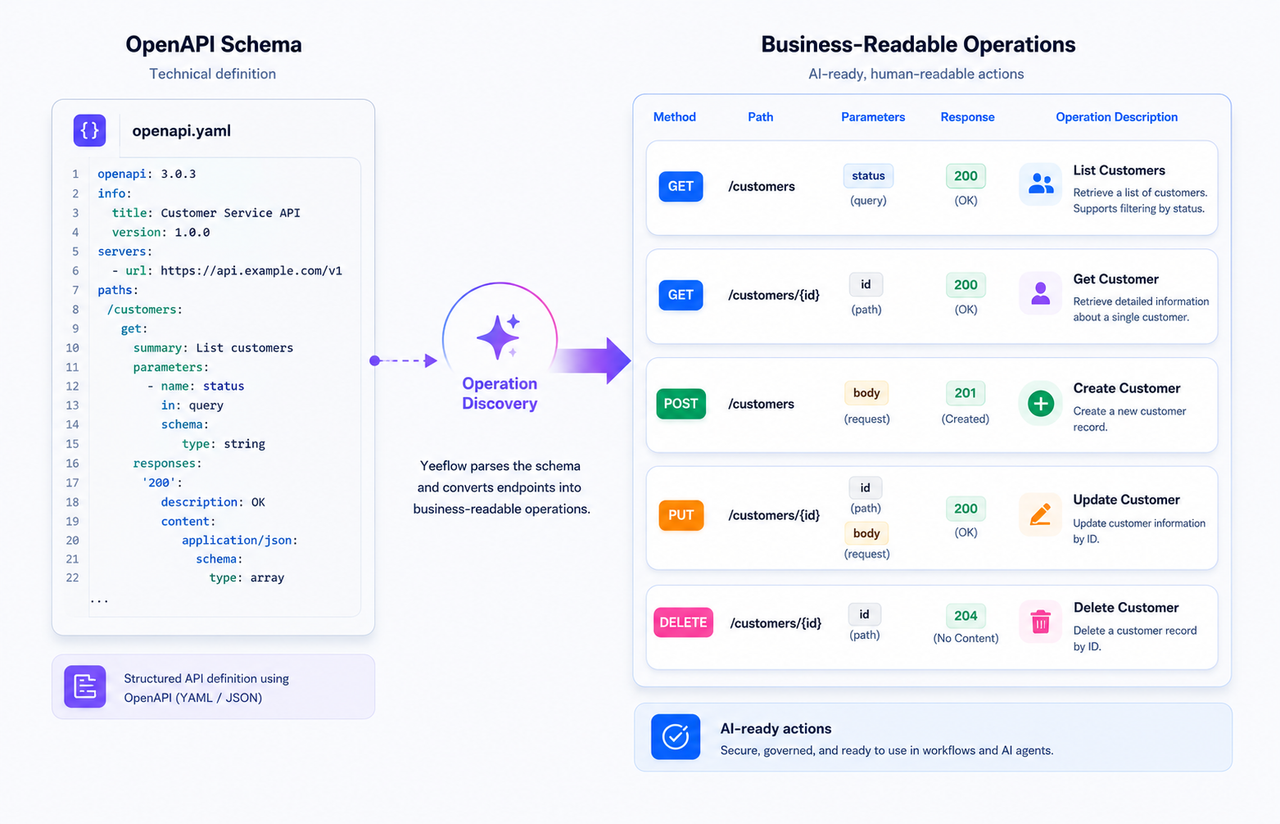
OpenAPI schema support is important because it turns an API from a technical endpoint into an understandable operation map.
For a business application, this matters in several ways.
First, it makes external capabilities clearer. A schema can describe what operations exist, what each operation does, what parameters it needs, and what kind of response it returns.
Second, it gives AI a more reliable decision space. AI does not need to guess how to interact with an external system. It can work from the operations Yeeflow has discovered from the schema.
Third, it helps teams keep access controlled. Admins and builders can decide which connection is used and which API operations are exposed through the schema. This creates a clearer boundary between AI and external systems.
Finally, it improves reuse. Once a set of API operations is defined, it can support more than one interaction pattern, such as retrieving data, checking status, updating records, or preparing a structured response.
Creating a controlled action boundary for AI
The value of Call RESTful API is not simply that AI can call an API.
The value is that AI can work within a defined set of approved operations.
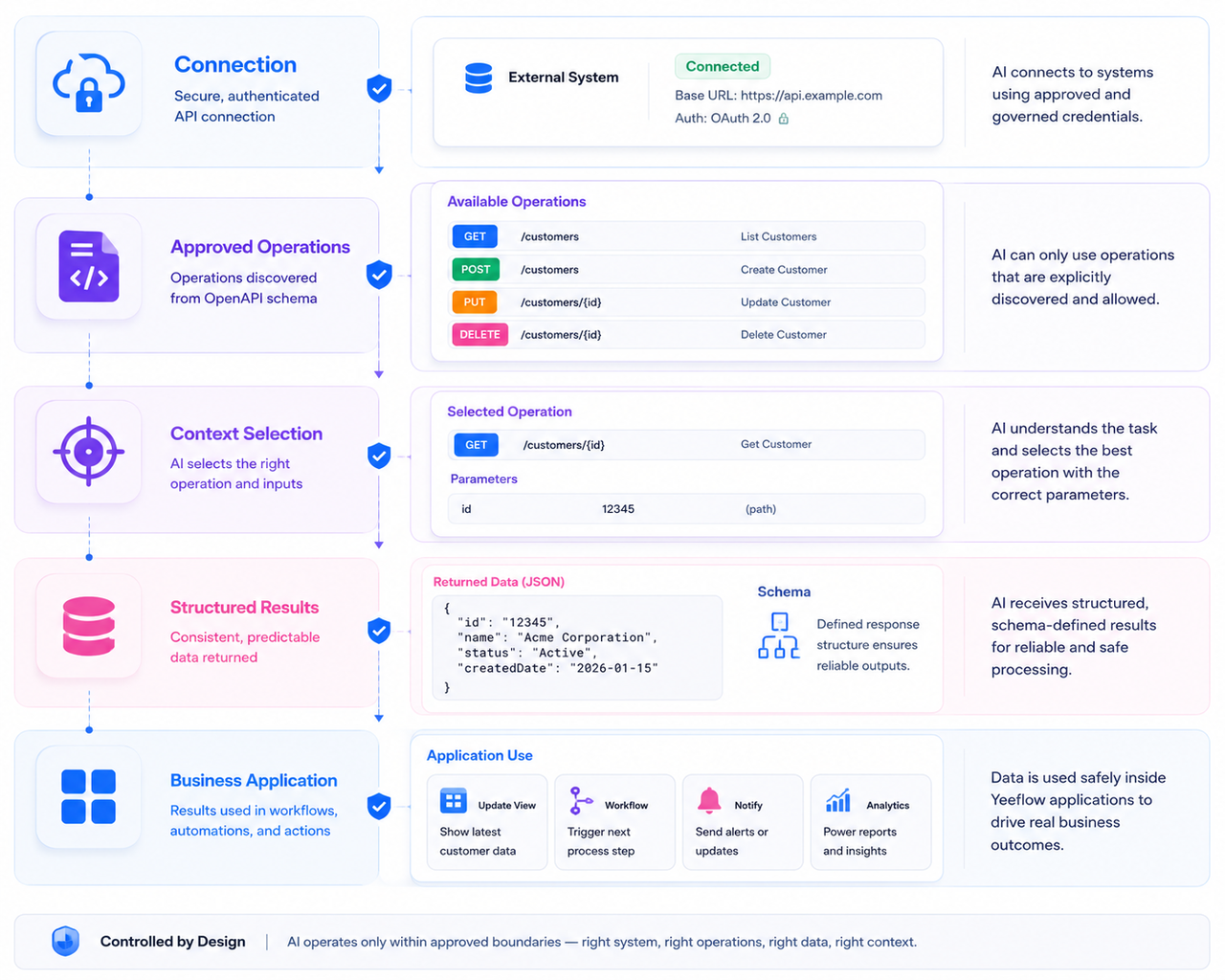
A business system may have many endpoints and many possible actions. Not all of them should be available in every AI experience. With schema-based operation discovery, Yeeflow can expose the operations that are relevant to a specific Agent or Copilot use case.
This creates a more controlled action boundary:
- the connection defines how Yeeflow reaches the external system
- the schema defines what operations are available
- the operation details help AI understand when to use each action
- the returned data can be used inside the business application
This approach helps teams connect AI to external systems while keeping the setup understandable and manageable.
Example: Yeeflow, SharePoint, and Copilot
Consider a partner management scenario.
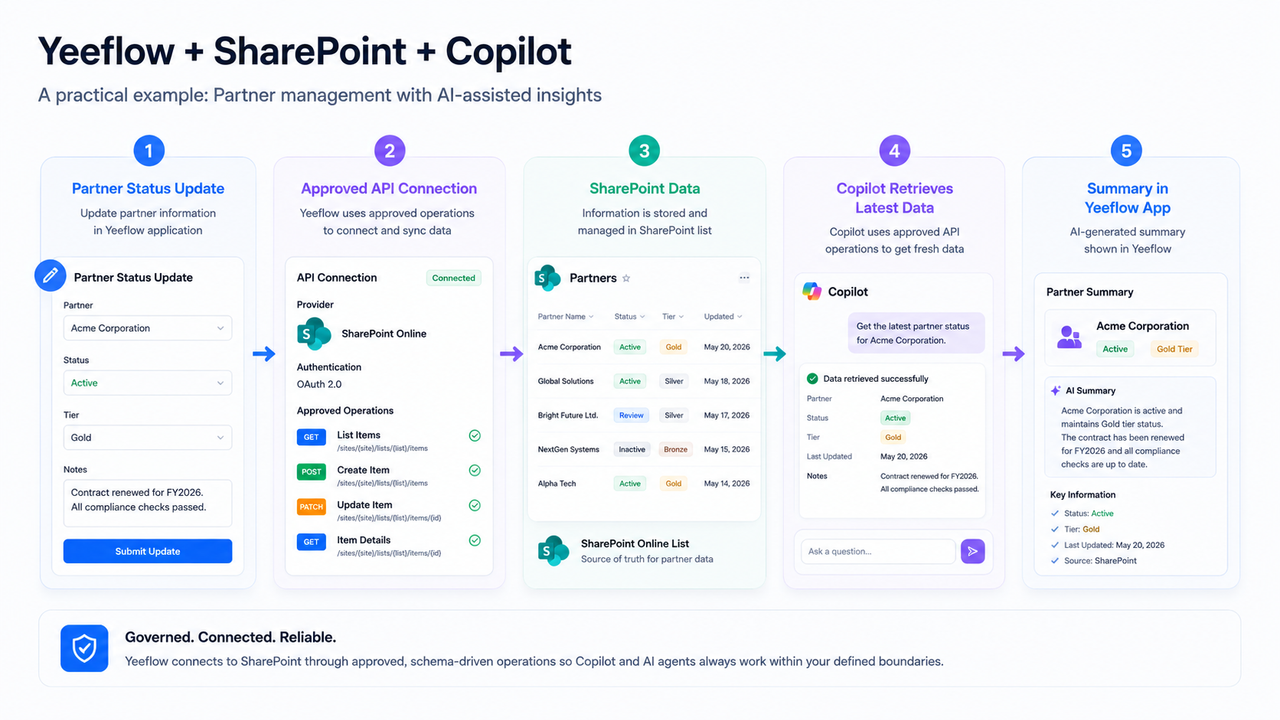
A team manages partner records inside a Yeeflow application. When a partner status changes, the update needs to be synced to SharePoint so other teams can see the latest information.
In the application, a user updates a partner status. A workflow sends that update to SharePoint through an approved API connection.
Then, when a user asks Copilot to summarize the latest partner status, Copilot can use Call RESTful API to work with approved SharePoint-related operations defined through schema.
Yeeflow parses the schema and exposes available operations, such as retrieving list details, reading list fields, getting list items, or updating list items. Copilot can then select the right operation, retrieve the latest SharePoint data, and generate a business-readable summary inside the Yeeflow application.
The key point is control.
Copilot is not calling an unmanaged external endpoint. It is working through a defined set of discoverable API operations. The user gets a useful summary, while the organization keeps the external system connection structured and bounded.
What this means for enterprise AI applications
For business teams, this makes AI more useful in daily work.
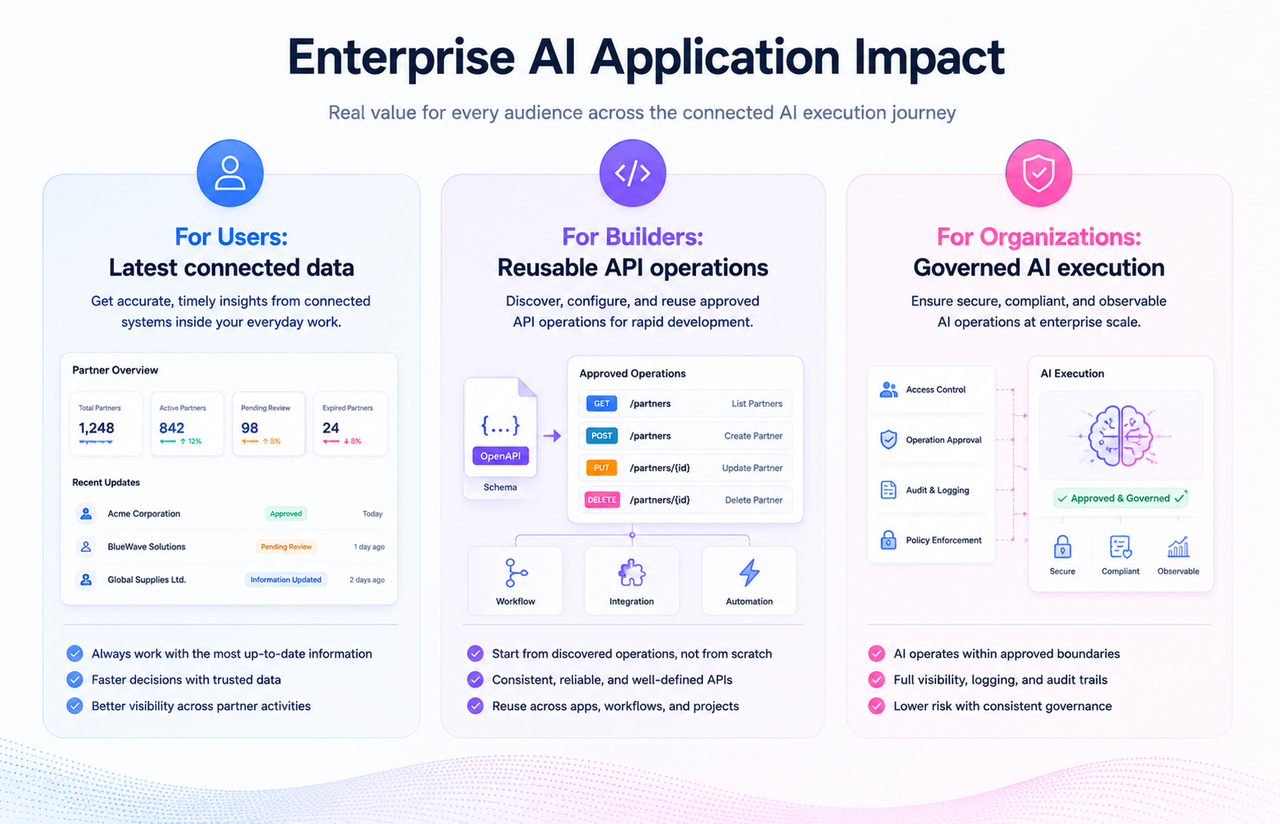
Users can ask for information from connected systems without manually switching between tools. They can receive summaries based on the latest external data. They can work inside the application while AI helps retrieve and interpret information from approved systems.
For builders and administrators, it creates a clearer configuration model.
External system access can be connected through reusable API connections. API capabilities can be described through schema. Available operations can be reviewed and customized. The result is a more structured way to bring external system capabilities into AI-powered applications.
For organizations, this supports a larger shift: AI can become part of operational workflows, not just a separate chat experience.
A more practical path to connected AI execution
As AI becomes part of enterprise applications, the most useful experiences will be the ones connected to real business context.
That means AI needs access to application data, workflow context, business documents, and external systems. But that access needs to be intentional and controlled.
Call RESTful API with OpenAPI-based operation discovery helps provide that foundation.
It gives Yeeflow AI a more structured way to connect with external business systems, discover approved operations, retrieve or update information, and support users inside real business workflows.
This is an important step toward AI that does more than respond.
It helps AI participate in business work.