Overview
What this template helps teams build
Department: Human Resources (in partnership with the hiring department and Finance; executive oversight when applicable).
Industries: Suitable for mid- to large-sized organizations across industries such as technology, financial services, manufacturing, education, healthcare, and government—anywhere headcount planning, budget control, and policy compliance are required. For example, a tech company may require Finance and HRBP approval for all new hires, while a government agency may enforce C-level sign-off for roles above a certain salary grade.
Purpose: To manage and control the internal approval process for creating or backfilling a position before recruitment begins. This ensures that each hire is justified, aligned with workforce planning, and within budget. Yeeflow enables hiring managers to initiate requests that automatically route to department heads, HR business partners, Finance, and—where necessary—executive leadership. By digitizing this process, companies reduce delays, enforce compliance, and maintain a complete approval trail for audit and planning purposes.
Workflow
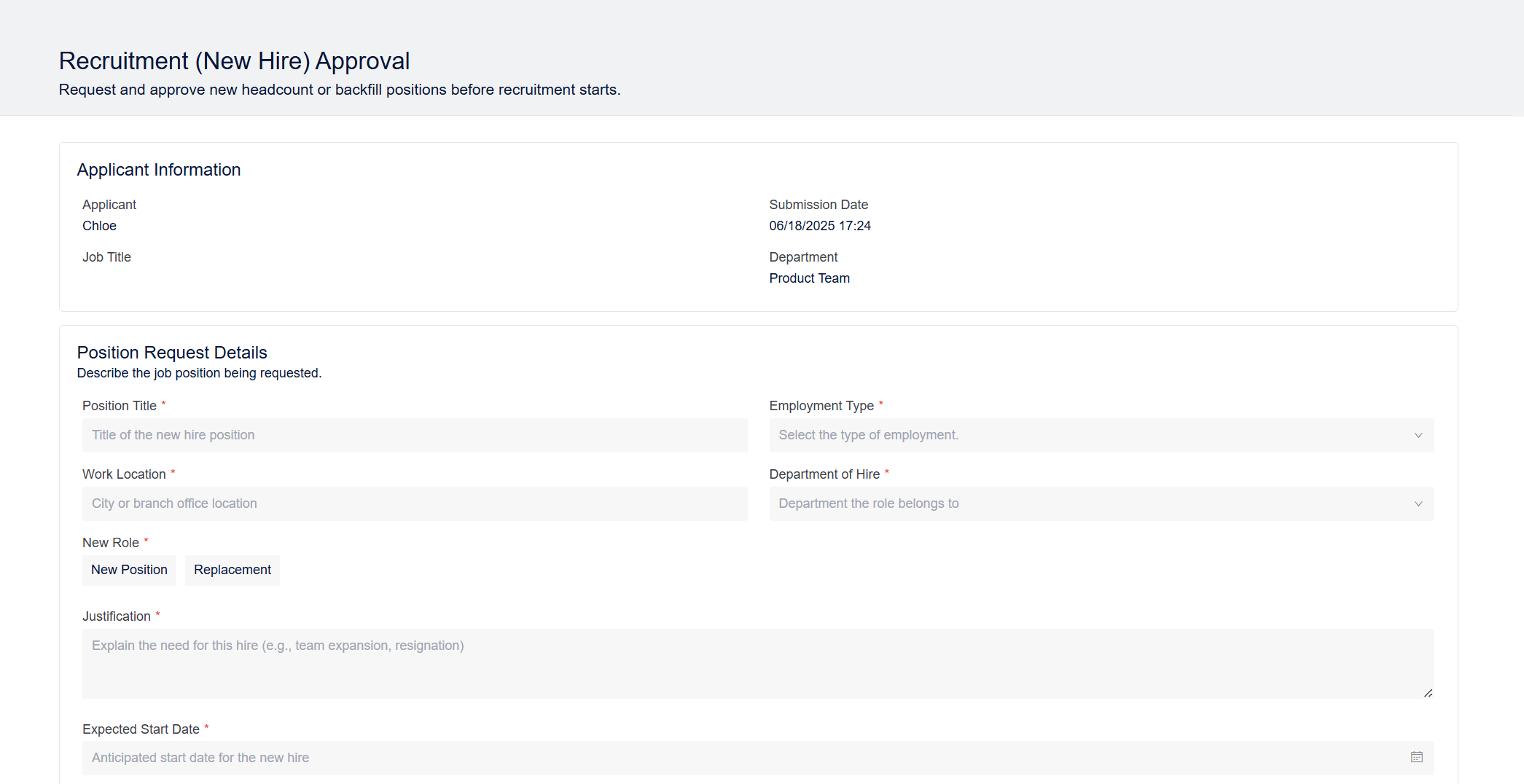
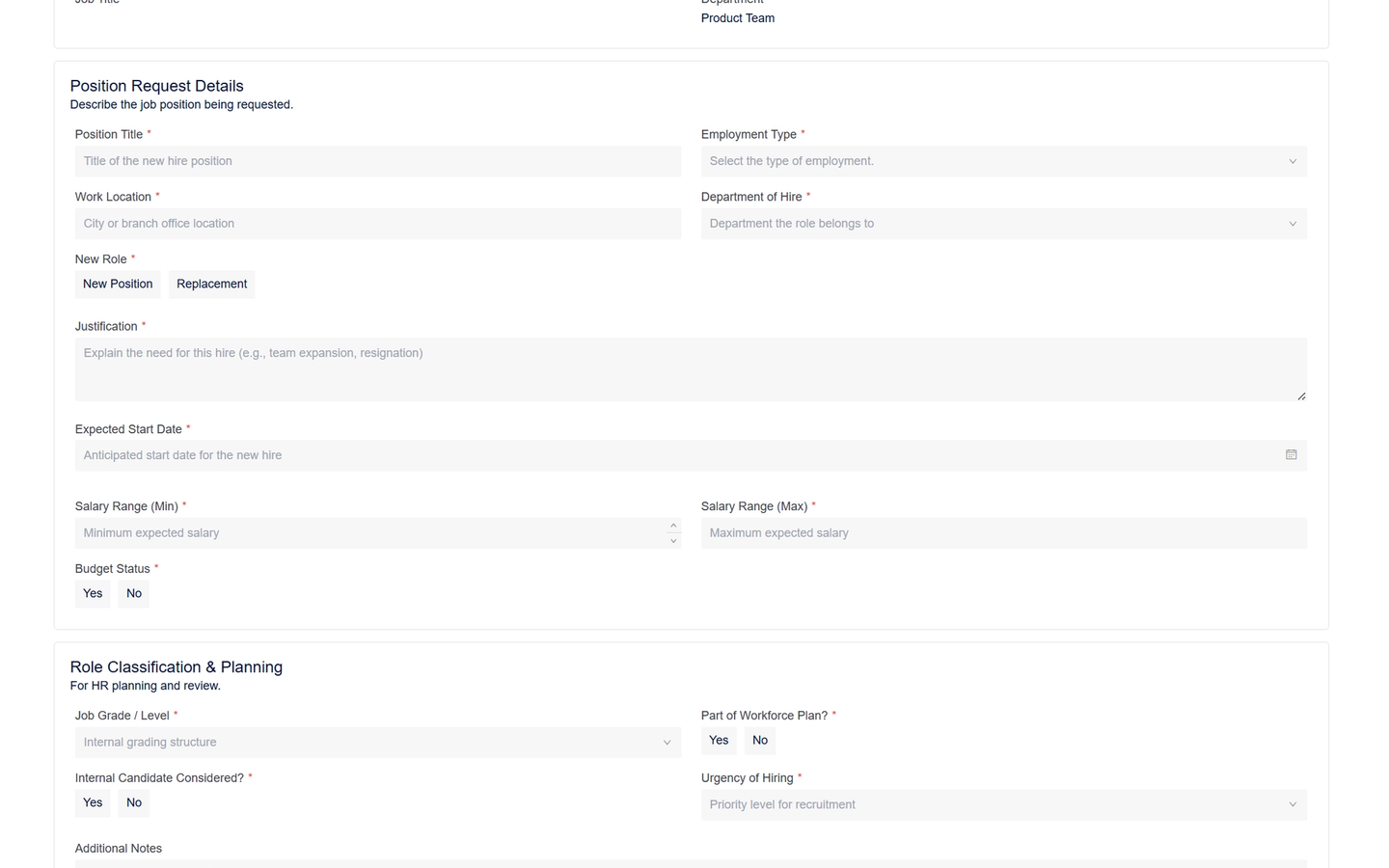
- Submission by Hiring Manager: A department manager fills out a Yeeflow form to request headcount. They include role details (position title, employment type, job grade), justification (e.g., workload increase, backfill), location, urgency, expected start date, and proposed salary range. The request indicates whether the position is within the approved workforce plan and budget.
- Department Head Approval: If the submitter is not the department head, the form first routes to their direct supervisor. The department head confirms the role’s strategic need and whether the team has capacity for onboarding. They approve, reject, or request changes.
- HRBP Review: Next, HR reviews the request to ensure alignment with headcount plans, internal policies, and potential internal mobility opportunities. HR may assess whether a similar role already exists, whether the grade and salary are appropriate, and if the timing is aligned with hiring guidelines.
- Finance Approval: Once HR has signed off, the request moves to Finance for budget validation. The finance reviewer checks whether the proposed salary range fits within the department’s operating budget. If not, they can flag the issue or impose conditions (e.g., defer hiring to next quarter). Yeeflow can present salary fields and budget codes directly to the Finance approver for decision-making.
- Executive Approval (Conditional): If the proposed Salary Range (Max) exceeds a predefined threshold (e.g., $100,000), Yeeflow automatically routes the request to an executive approver such as the CEO or COO. This step ensures high-level oversight for costly or strategic hires.
- Approval Outcome: If all required approvers sign off, Yeeflow notifies the requester and can automatically trigger the next steps—such as opening a requisition, notifying the recruitment team, or generating an offer draft. If any approver rejects the request, the system ends the flow with feedback, and optionally allows resubmission after adjustments.
Example
A fast-growing software company uses Yeeflow to manage hiring approvals. A project manager in the Product team submits a request to hire two developers to support an upcoming release. The request goes to the Head of Product, who approves based on team workload. HRBP checks for internal transfer options, confirms the job level, and approves. Finance verifies that budget is available. Since the maximum salary exceeds $100,000, Yeeflow routes the request to the COO. The COO approves with a note: “Start date should be pushed to Q4.” All feedback and approvals are tracked in Yeeflow. Within 48 hours, the recruiter receives a green light to start sourcing.
Before Yeeflow, this process involved scattered emails and offline spreadsheets. Now, with structured routing, audit trails, and auto-notifications, the company ensures hiring is aligned, documented, and timely. This helps prevent unauthorized hires, improves HR’s visibility, and speeds up time-to-hire.